Thu, Oct 1, 2026
[Archive]
Volume 3, Issue 2 (Winter 2025)
CPR 2025, 3(2): 117-120 |
Back to browse issues page


Download citation:
BibTeX | RIS | EndNote | Medlars | ProCite | Reference Manager | RefWorks
Send citation to:


BibTeX | RIS | EndNote | Medlars | ProCite | Reference Manager | RefWorks
Send citation to:
Hashemi S H, Hashemi S N, Hashemi S B. Comparison of Chemical Medication With a Herbal Agent for the Treatment of Recurrent Aphthous Stomatitis: A Distinctive Study Method. CPR 2025; 3 (2) :117-120
URL: http://cpr.mazums.ac.ir/article-1-84-en.html
URL: http://cpr.mazums.ac.ir/article-1-84-en.html


Student Research Committee, School of Medicine, Mazandaran University of Medical Sciences, Sari, Iran.
Full-Text [PDF 731 kb]
(48 Downloads)
| Abstract (HTML) (167 Views)
Discussion
This study was conducted to compare the effect of topical triamcinolone oral paste with P. divaricata in healing RAS ulcers. This report showed that the short-term use of P. divaricata was more effective than topical triamcinolone oral paste in relieving pain and burning and reducing the size of oral aphthous ulcers. The topical corticosteroids mainly used in treating aphthous are triamcinolone oral paste and dexamethasone [4]. In a double-blind clinical trial conducted by Abbasi et al., topical triamcinolone oral paste was not superior to Salvizan gel derived from the sage plant to alleviate pain and heal ulcers [6]. These findings indicate that natural therapeutic agents are fortunately available for corticosteroid-resistant RAS.
Coppari et al. showed that P. divaricateis effective in ulcer healing due to its antioxidant and anti-inflammatory effects [7]. However, studies have yet to investigate the medicinal properties of plums in the northern regions of Iran. According to the study by Akbarzadeh et al. [8], the wild plum crescent in the forests of Gilan Province, Iran, is the same fruit species that Coppari et al. [7] researched.
By passing years of study and research in the field of RAS, which can affect the patient’s quality of life in terms of the severity of the pain and the frequency of its episodes, definitive treatment for it has yet to be determined [3]. Therefore, finding new and less complicated treatments, such as natural products, can be promising. Undoubtedly, the results of the present case study need to be investigated, and broader clinical trials should be conducted in the future.
On the other hand, RAS is also considered a psychosomatic disorder [9]. The modern perspective on psychosomatic disorders refers to the role of stress, depression, and lack of social support in addition to biological factors in the development or outcome of the disease [10]. The subject has been exposed to apparent stress during that period, which is strongly associated with a transient increase in salivary cortisol and changes in immunoregulatory activity and plays a role in the disease [11]. A single woman who lives with her mother suffers from physical symptoms and regression to psychologically defend against stress to be gratified by receiving her mother’s attention. Unlike the usual treatments, this is where the mother’s treatment recommendation works. This psychiatric view does not simply reject the therapeutic effect of P. divaricate. However, it describes a multidisciplinary understanding of the pathology and treatment of psychosomatic disorders, such as RAS.
Conclusion
This study suggests that natural agents may offer an alternative to synthetic corticosteroids for managing RAS. Its findings also indicate that treatment outcomes should be considered in the context of patients’ psychosocial experiences, alongside biological factors. An interdisciplinary approach that combines assessment of therapeutic efficacy with attention to stress and psychological well-being may therefore support more comprehensive care for patients with oral mucosal disorders.
Ethical Considerations
Compliance with ethical guidelines
The present study is a report on the disease condition of the article’s first author.
Funding
This research did not receive any grant from funding agencies in the public, commercial, or non-profit sectors.
Authors' contributions
All authors contributed equally to the conception and design of the study, data collection and analysis, interception of the results and drafting of the manuscript. Each author approved the final version of the manuscript for submission.
Conflict of interest
The authors declared no conflict of interest.
Full-Text: (33 Views)
Introduction
Aphthous stomatitis is an extremely painful ulcer of the oral mucous membranes. Recurrent attacks of single or multiple superficial painful ulcers with intervals of several days to several months are called recurrent aphthous stomatitis (RAS) [1]. Approximately 20% of the population suffers from RAS [2].
According to their morphological type, RAS is usually divided into minor, major, and herpetiform categories. It usually heals within 1 to 2 weeks (minor and herpetiform types) or more than 6 weeks (major type), and during this time, quality of life is affected due to problems in feeding and speaking [3].
Various local or systemic drugs, including anesthetics and pain relievers, disinfectants, and anti-inflammatory drugs, such as corticosteroids, anti-TNF-α, thalidomide, colchicine, and the like, have been suggested to heal various aphthous ulcers [3, 4]. Patients and doctors have positive and optimistic attitudes about herbal remedies [5] and consider them natural and uncomplicated. For example, Abbasi et al. pointed out in their study that herbal medicines with anti-inflammatory and antimicrobial properties, such as curcumin in turmeric, aloe vera, pomegranate, and so on, have been considered by researchers in treating RAS [6]. However, due to the unclear etiology of this disease, it is still a challenge for therapists and researchers to achieve a definite and uncomplicated treatment that alleviates the symptoms and reduces the period and recurrence of the disease.
This study aims to report a patient with RAS who had the experience of comparing topical triamcinolone oral paste with Prunus divaricata.
Case Presentation
A 38-year-old single woman, a psychiatrist, and a resident of one of the northern cities of Iran suffered from RAS several times since adolescence and used various medicines in its treatment. Medicines were effective in some periods but were not very helpful in the following periods. Although the lesions were not as extensive as the initial experiences, she experienced the problems caused by it 1 to 2 times yearly and for about one week each time.
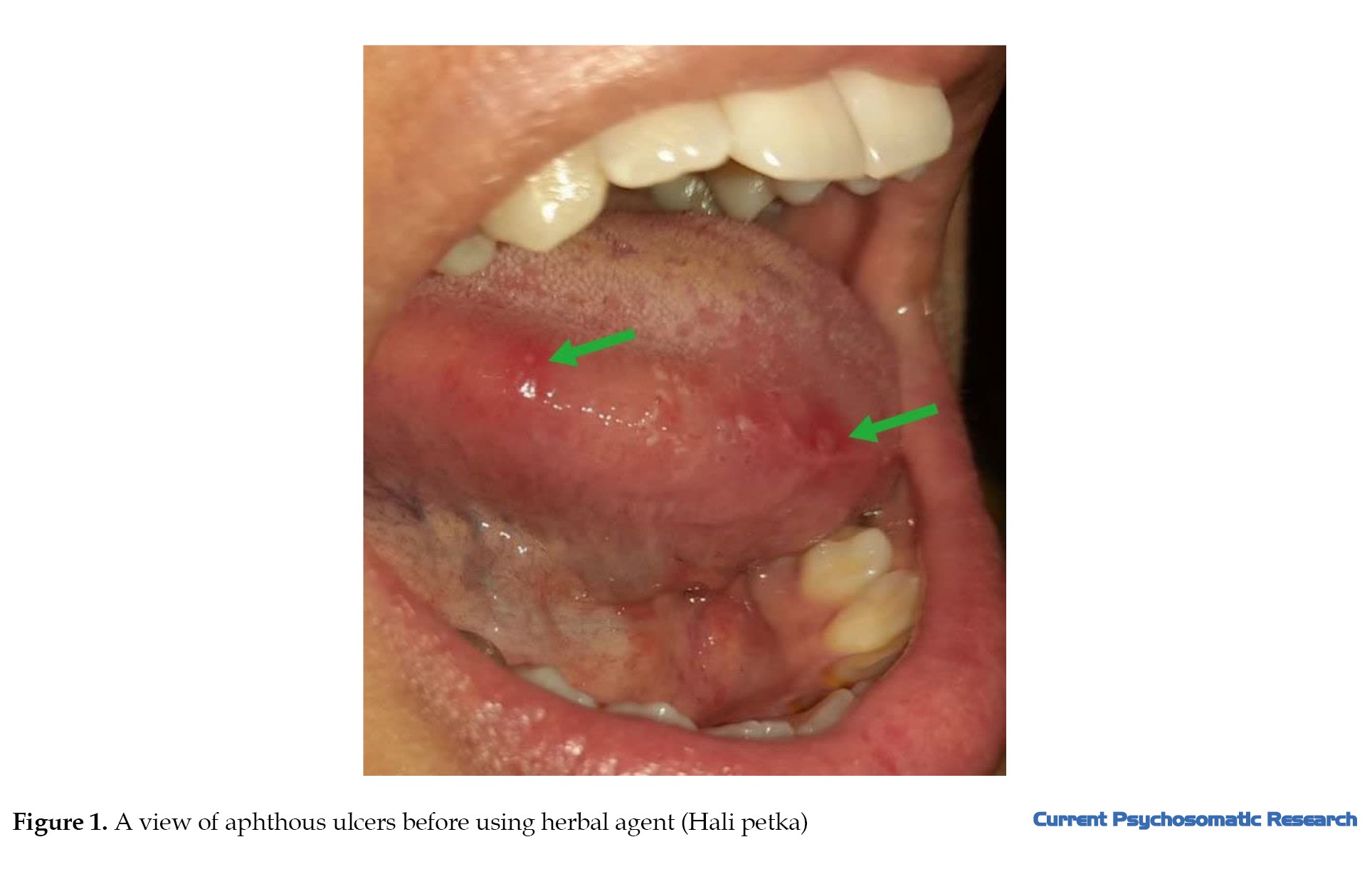
Recently, due to the consumption of some allergenic foods in the summer and exposure to several stressors at the same time, she suffered from three ulcerative, erythematous, and painful lesions with a distinct appearance of aphthous stomatitis on the side of the tongue. By consuming some stimulating foods, the burning and soreness of the ulcers intensified, and contrary to previous experiences, consuming some foods and cool liquids such as cold drinking, ice cream, and watermelon did not alleviate it. Due to the severity of the symptoms on the third day of the disease, she decided to use triamcinolone oral paste. However, after 4 times of topical application, her lesions remained, and the following day, she could not speak due to the pain caused by the contact of the ulcer with the sharp surface of the teeth.
Following her mother’s advice, she started to use a quantity of P. divaricate, Heli Potka, in the local dialect of Mazandaran, the Northern Province of Iran. After that, she noticed a significant alleviation in the pain and burning of the ulcers. Then, she mixed and diluted some P. divaricata with a small quantity of sugar in water and sipped it. Due to the soothing effect of this substance in the pain of aphthous ulcers, she used some of it as a dessert along with the main meals.
After 2 days of recurrent use of P. divaricata, the ulcer healed as she remembered from her initial experience with Mirtex solution or a combined mouthwash prepared with tetracycline, lidocaine, and diphenhydramine. However, no combination was as miraculous as Mirtex in ulcer healing. The total amount of P. divaricata consumed during this period is estimated to be approximately 300 g. Figure 1 shows a view of the aphthous ulcers before healing with the recurrent use of P. divaricata.
Aphthous stomatitis is an extremely painful ulcer of the oral mucous membranes. Recurrent attacks of single or multiple superficial painful ulcers with intervals of several days to several months are called recurrent aphthous stomatitis (RAS) [1]. Approximately 20% of the population suffers from RAS [2].
According to their morphological type, RAS is usually divided into minor, major, and herpetiform categories. It usually heals within 1 to 2 weeks (minor and herpetiform types) or more than 6 weeks (major type), and during this time, quality of life is affected due to problems in feeding and speaking [3].
Various local or systemic drugs, including anesthetics and pain relievers, disinfectants, and anti-inflammatory drugs, such as corticosteroids, anti-TNF-α, thalidomide, colchicine, and the like, have been suggested to heal various aphthous ulcers [3, 4]. Patients and doctors have positive and optimistic attitudes about herbal remedies [5] and consider them natural and uncomplicated. For example, Abbasi et al. pointed out in their study that herbal medicines with anti-inflammatory and antimicrobial properties, such as curcumin in turmeric, aloe vera, pomegranate, and so on, have been considered by researchers in treating RAS [6]. However, due to the unclear etiology of this disease, it is still a challenge for therapists and researchers to achieve a definite and uncomplicated treatment that alleviates the symptoms and reduces the period and recurrence of the disease.
This study aims to report a patient with RAS who had the experience of comparing topical triamcinolone oral paste with Prunus divaricata.
Case Presentation
A 38-year-old single woman, a psychiatrist, and a resident of one of the northern cities of Iran suffered from RAS several times since adolescence and used various medicines in its treatment. Medicines were effective in some periods but were not very helpful in the following periods. Although the lesions were not as extensive as the initial experiences, she experienced the problems caused by it 1 to 2 times yearly and for about one week each time.
Recently, due to the consumption of some allergenic foods in the summer and exposure to several stressors at the same time, she suffered from three ulcerative, erythematous, and painful lesions with a distinct appearance of aphthous stomatitis on the side of the tongue. By consuming some stimulating foods, the burning and soreness of the ulcers intensified, and contrary to previous experiences, consuming some foods and cool liquids such as cold drinking, ice cream, and watermelon did not alleviate it. Due to the severity of the symptoms on the third day of the disease, she decided to use triamcinolone oral paste. However, after 4 times of topical application, her lesions remained, and the following day, she could not speak due to the pain caused by the contact of the ulcer with the sharp surface of the teeth.
Following her mother’s advice, she started to use a quantity of P. divaricate, Heli Potka, in the local dialect of Mazandaran, the Northern Province of Iran. After that, she noticed a significant alleviation in the pain and burning of the ulcers. Then, she mixed and diluted some P. divaricata with a small quantity of sugar in water and sipped it. Due to the soothing effect of this substance in the pain of aphthous ulcers, she used some of it as a dessert along with the main meals.
After 2 days of recurrent use of P. divaricata, the ulcer healed as she remembered from her initial experience with Mirtex solution or a combined mouthwash prepared with tetracycline, lidocaine, and diphenhydramine. However, no combination was as miraculous as Mirtex in ulcer healing. The total amount of P. divaricata consumed during this period is estimated to be approximately 300 g. Figure 1 shows a view of the aphthous ulcers before healing with the recurrent use of P. divaricata.
Discussion
This study was conducted to compare the effect of topical triamcinolone oral paste with P. divaricata in healing RAS ulcers. This report showed that the short-term use of P. divaricata was more effective than topical triamcinolone oral paste in relieving pain and burning and reducing the size of oral aphthous ulcers. The topical corticosteroids mainly used in treating aphthous are triamcinolone oral paste and dexamethasone [4]. In a double-blind clinical trial conducted by Abbasi et al., topical triamcinolone oral paste was not superior to Salvizan gel derived from the sage plant to alleviate pain and heal ulcers [6]. These findings indicate that natural therapeutic agents are fortunately available for corticosteroid-resistant RAS.
Coppari et al. showed that P. divaricateis effective in ulcer healing due to its antioxidant and anti-inflammatory effects [7]. However, studies have yet to investigate the medicinal properties of plums in the northern regions of Iran. According to the study by Akbarzadeh et al. [8], the wild plum crescent in the forests of Gilan Province, Iran, is the same fruit species that Coppari et al. [7] researched.
By passing years of study and research in the field of RAS, which can affect the patient’s quality of life in terms of the severity of the pain and the frequency of its episodes, definitive treatment for it has yet to be determined [3]. Therefore, finding new and less complicated treatments, such as natural products, can be promising. Undoubtedly, the results of the present case study need to be investigated, and broader clinical trials should be conducted in the future.
On the other hand, RAS is also considered a psychosomatic disorder [9]. The modern perspective on psychosomatic disorders refers to the role of stress, depression, and lack of social support in addition to biological factors in the development or outcome of the disease [10]. The subject has been exposed to apparent stress during that period, which is strongly associated with a transient increase in salivary cortisol and changes in immunoregulatory activity and plays a role in the disease [11]. A single woman who lives with her mother suffers from physical symptoms and regression to psychologically defend against stress to be gratified by receiving her mother’s attention. Unlike the usual treatments, this is where the mother’s treatment recommendation works. This psychiatric view does not simply reject the therapeutic effect of P. divaricate. However, it describes a multidisciplinary understanding of the pathology and treatment of psychosomatic disorders, such as RAS.
Conclusion
This study suggests that natural agents may offer an alternative to synthetic corticosteroids for managing RAS. Its findings also indicate that treatment outcomes should be considered in the context of patients’ psychosocial experiences, alongside biological factors. An interdisciplinary approach that combines assessment of therapeutic efficacy with attention to stress and psychological well-being may therefore support more comprehensive care for patients with oral mucosal disorders.
Ethical Considerations
Compliance with ethical guidelines
The present study is a report on the disease condition of the article’s first author.
Funding
This research did not receive any grant from funding agencies in the public, commercial, or non-profit sectors.
Authors' contributions
All authors contributed equally to the conception and design of the study, data collection and analysis, interception of the results and drafting of the manuscript. Each author approved the final version of the manuscript for submission.
Conflict of interest
The authors declared no conflict of interest.
References
- Preeti L, Magesh K, Rajkumar K, Karthik R. Recurrent aphthous stomatitis.J Oral Maxillofac Pathol. 2011; 15(3):252-6. [DOI:10.4103/0973-029X.86669] [PMID]
- Akintoye SO, Greenberg MS. Recurrent aphthous stomatitis. Dent Clin North Am. 2014;5 8(2):281-97. [DOI:10.1016/j.cden.2013.12.002] [PMID]
- Dalessandri D, Zotti F, Laffranchi L, Migliorati M, Isola G, Bonetti S, et al. Treatment of recurrent aphthous stomatitis (RAS; aphthae; canker sores) with a barrier forming mouth rinse or topical gel formulation containing hyaluronic acid: A retrospective clinical study. BMC Oral Health. 2019; 19(1):153. [DOI:10.1186/s12903-019-0850-1] [PMID]
- Altenburg A, El-Haj N, Micheli C, Puttkammer M, Abdel-Naser MB, Zouboulis CC. The treatment of chronic recurrent oral aphthous ulcers. Dtsch Arztebl Int. 2014; 111(40):665-73. [DOI:10.3238/arztebl.2014.0665] [PMID]
- Soltanipour S, Keihanian F, Saeidinia A. Knowledge, attitude and practice of physicians towards herbal remedies in Rasht, north of Iran. Medicine. 2022; 101(47):e31762. [DOI:10.1097/MD.0000000000031762] [PMID]
- Abbasi F, Rasoulzadeh Z, Yavari A. The effect of sage (Salvizan gel) compared to triamcinolone acetonide on the treatment of recurrent aphthous stomatitis: A double-blinded randomized clinical trial. BMC Oral Health. 2023; 23(1):157.[DOI:10.1186/s12903-023-02861-y] [PMID]
- Coppari S, Colomba M, Fraternale D, Brinkmann V, Romeo M, Rocchi MBL, et al. Antioxidant and anti-inflammaging ability of prune (Prunus Spinosa L.) extract result in improved wound healing efficacy. Antioxidants (Basel). 2021; 10(3):374.[DOI:10.3390/antiox10030374] [PMID]
- Akbarzadeh A, Jaimand K, Hemmati A, Khanjani Shiraz B. [Medicinal plants of Gilan province and their applications (Persian)]. Iran J Med Aromat Plants Res. 2010; 26(3):326-47. [DOI:10.22092/ijmapr.2010.6793]
- Ślebioda Z, Dorocka-Bobkowska B. Systemic and environmental risk factors for recurrent aphthous stomatitis in a Polish cohort of patients. Postepy Dermatol Alergol. 2019; 36(2):196-201. [DOI:10.5114/ada.2018.74638] [PMID]
- Creed F. Psychosomatic disorder. In: Creed F, editir. Encyclopedia of stress. Amsterdam: Elsevier; 2007. [DOI: 10.1016/B978-012373947-6.00355-X]
- Wang K, Ding L, Yang C, Hao X, Wang C. Exploring the relationship between psychiatric traits and the risk of mouth ulcers using bi-directional Mendelian randomization. Front Genet. 2020; 11:608630. [DOI:10.3389/fgene.2020.608630] [PMID]
Type of Study: case report |
Subject:
Clinical Pharmacy
Received: 2023/11/8 | Accepted: 2026/08/11 | Published: 2026/09/28
Received: 2023/11/8 | Accepted: 2026/08/11 | Published: 2026/09/28
Send email to the article author
| Rights and permissions | |
 |
This work is licensed under a Creative Commons Attribution-NonCommercial 4.0 International License. |
Address: Mazandaran University of Medical Sciences, Moallem Square, Sari, Iran.
Journal Office Tel: +981134343407
Email: cpr mazums.ac.ir
Publisher: Negah Institute for Social Research & Scientific Communication
Publisher Tel: +9821 4535 5555; +9821 4535 5000